

A dead battery never picks a good time. It quits on a cold morning, in a parking lot, or right before a long drive.
The good news is that a weak battery usually gives you warning signs first, and you can check it yourself in about five minutes. This guide shows you how to test car battery voltage with a multimeter, how to check it without one and how to tell a bad battery from a bad alternator. We also cover Toyota hybrids, where the 12-volt battery is often hiding in the trunk.
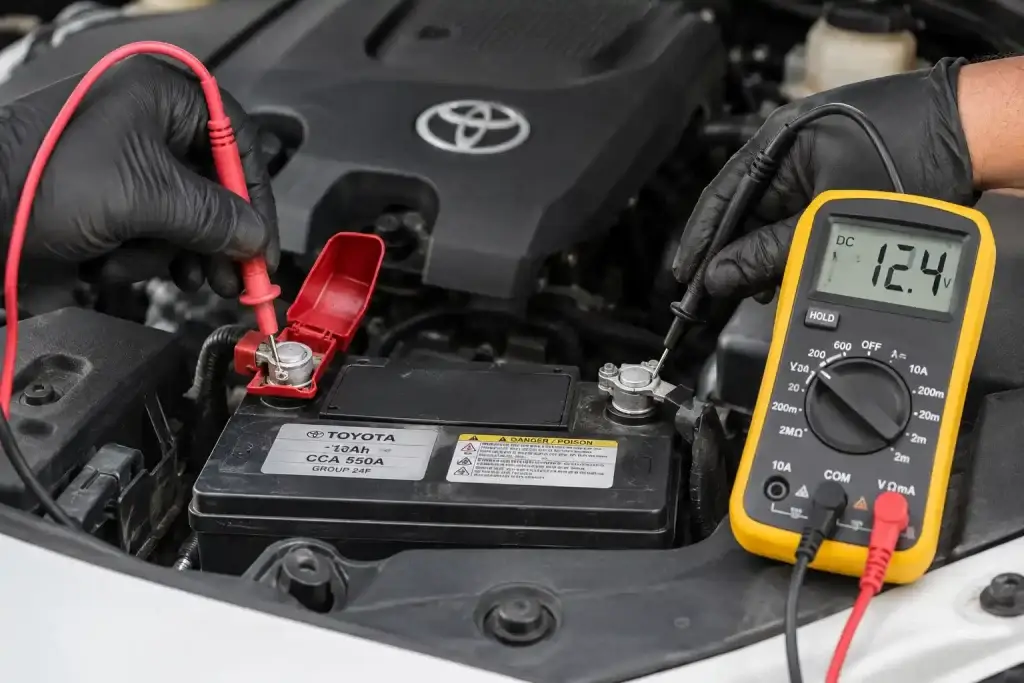
Quick answer: Turn the car off and let it sit for at least an hour. Set a multimeter to 20V DC. Touch the red probe to the positive (+) terminal and the black probe to the negative (-) terminal. A healthy, fully charged battery reads about 12.6 volts or more. Below 12.4 volts, charge it and test again. If it will not hold a charge, it is time for a new one.
Signs Your Car Battery Needs Testing
You do not have to wait for a no-start to check your battery. Test it soon if you notice any of these:
- Slow, lazy cranking. The engine turns over slower than usual, especially on cold mornings.
- Clicking when you turn the key or press start. The starter is not getting enough power.
- Dim headlights or interior lights, mostly at idle or while starting.
- A battery warning light on the dash. This can point to the battery or the charging system. If you are not sure which light you are looking at, here is what each dashboard warning light means.
- Electrical glitches. The radio resets, power windows feel slow, or the clock loses time.
- A swollen or leaking case, or a rotten egg smell near the battery.
- White, blue or green crust on the terminals.
- Age. The battery is three years old or more.
One or two of these signs do not always mean the battery is bad. Corrosion or a loose cable can cause the same problems. That is why a quick test is worth doing before you buy anything.
What You Need and How to Stay Safe
You only need a few things to check your car battery at home:
- A digital multimeter with a DC voltage setting. Basic ones sell for about $10 to $25.
- Safety glasses and gloves
- A wire brush or old toothbrush, plus baking soda and water for cleaning terminals
- A helper for the cranking test (optional but easier)
Car batteries hold sulfuric acid and can give off hydrogen gas. Keep these safety rules in mind:
- Wear eye protection the whole time.
- No smoking, flames or sparks near the battery.
- Take off rings, watches and metal bracelets.
- Never let a metal tool or the two probes touch both terminals at once.
- If the case is cracked, swollen or leaking, do not test it. Have it replaced.
How to Test a Car Battery With a Multimeter
A multimeter test is the most reliable check you can do at home. It works the same on a Corolla, a Tacoma or almost any other gas car or truck.
Step 1: Let the Battery Rest
Right after a drive, a battery carries a “surface charge.” This is extra voltage sitting on the plates that makes a weak battery look healthy for a while.
For a true reading, let the car sit with everything off for at least an hour. Overnight is even better. In a hurry? Turn the headlights on for about one minute, switch them off and wait a few minutes. That burns off most of the surface charge.
Step 2: Turn Everything Off and Open the Hood
Switch off the engine, lights, radio and climate control. Close the doors so the interior lights go out. Then find the battery. Most sit in the engine bay, but some cars and many hybrids keep it in the trunk or under a seat.
Step 3: Clean the Terminals if Needed
Crusty white or blue buildup on the posts can throw off your reading. Brush it away with a mix of baking soda and water, then wipe the posts dry.
Step 4: Set the Multimeter to 20V DC
Turn the dial to the DC voltage section, marked with a V and a straight line. Pick the 20 setting. If your meter is auto-ranging, just choose DC volts.
Step 5: Connect the Probes
Touch the red probe to the positive (+) terminal. It usually has a red cover. Touch the black probe to the negative (-) terminal. If the screen shows a minus sign, the probes are reversed. Just swap them.
Test on the battery posts themselves, not on remote jump-start terminals. Long cables between the two can lower the reading.
Step 6: Read the Voltage
Hold the probes steady for a few seconds and note the number. Then compare it to the chart below.
Car Battery Voltage Chart
These are approximate resting voltages for a standard 12-volt flooded battery at room temperature, after the surface charge is gone.
| Resting voltage | Approximate charge | What to do |
|---|---|---|
| 12.6 V or higher | About 100% | Healthy and fully charged |
| 12.4 V | About 75% | Fine, but charge it soon |
| 12.2 V | About 50% | Charge it, then test again |
| 12.0 V | About 25% | Low. Charge it and test again |
| 11.9 V or lower | Discharged | Charge it right away. If it will not recover, replace it |
AGM batteries, common in start-stop cars, usually rest a little higher. A fully charged AGM often reads around 12.8 volts or more. Cold weather also pulls readings down slightly.
A low reading does not always mean the battery is dead. It may just need a full charge. Charge it with a battery charger, let it rest a few hours and test again. If the voltage drops back down within a day or two, the battery is no longer holding a charge.
How to Test Battery Voltage While Cranking
Resting voltage tells you how full the battery is. A cranking test shows how well it delivers power when the engine actually needs it.
- Keep the probes on the terminals, red to positive and black to negative.
- Have a helper start the engine normally.
- Watch the lowest number on the screen during cranking.
A healthy battery should stay at about 9.6 to 10 volts or higher while the engine cranks. If it dips below that, or the engine turns over slowly, the battery is struggling under load.
How to Test the Alternator With the Engine Running
This quick step tells you whether the charging system is doing its job. Skipping it is how many people end up replacing a good battery.
- Start the engine and let it idle.
- Measure across the battery terminals again.
- You should see about 13.5 to 14.5 volts.
- Turn on the headlights, blower fan and rear defroster. The reading should stay close to that range.
If the voltage stays near 12.6 or lower with the engine running, the alternator is likely not charging. If it goes well above 15 volts, the charging system may be overcharging, which can also damage the battery.
Battery or Alternator? Read Your Results
| What you measured | Most likely cause |
|---|---|
| Low resting voltage, normal running voltage (13.5 to 14.5 V) | Weak or old battery, or a drain while parked |
| Good resting voltage, low running voltage | Alternator or charging system problem |
| Good resting voltage, big drop while cranking | Battery losing capacity, or loose or corroded cables |
| Car dies soon after a jump start | Alternator not charging |
| Battery dead every few days, tests fine after charging | Something drawing power while the car is off |
How to Check Car Battery Health Without a Multimeter
No multimeter? You can still get a good idea of your battery’s condition. These checks are less exact, but they are free and fast.

1. The Headlight Test
Turn the headlights on without starting the engine. Look at how bright they are against a wall or garage door. Now start the engine and watch the lights.
If they dim a lot while cranking, the battery is weak. If they were dim even before you started the car, the battery is low on charge. If they get noticeably brighter once the engine runs, the battery was low and the alternator is now doing the work.
2. The Built-In Charge Indicator
Some batteries have a small round window on top, often called a magic eye. Its color shows the charge level. Green usually means charged and dark means it needs charging. A clear or yellow eye often means the battery should be replaced. Colors vary by brand, so check the label on top of the battery for what each one means.
3. Your Car’s Own Voltage Display
Some vehicles show battery voltage in the instrument cluster or service menu. A cheap OBD2 scanner that plugs in under the dash can also read live voltage on your phone. Use the same voltage chart above.
4. A Close Look at the Battery
Pop the hood and look for a bulging or cracked case, leaks, heavy corrosion or a loose hold-down clamp. Any of these is a reason to have the battery checked.
5. A Free Test at a Store or Shop
Most major auto parts stores in the US will test your battery for free, often right in the parking lot. According to AAA, members in most areas can also get a free battery and charging system test from a mobile technician.
Why a Battery Can Pass a Voltage Test and Still Fail
This is the part most people miss. A voltmeter shows how full the battery is, not how healthy it is.
Think of it like a gas tank that slowly shrinks. The gauge can read full, but the tank holds less fuel each year. An old battery can show 12.6 volts at rest and still lack the power to crank your engine on a cold morning.
To check true battery health, shops use a load tester or a digital conductance tester. A load tester puts a heavy draw on the battery and watches how well it holds voltage. A conductance tester measures internal resistance and estimates the remaining cold cranking amps (CCA). If your battery is three years or older, a load or conductance test is the best way to know how much life it has left.
How to Test the 12-Volt Battery in a Toyota Hybrid
Hybrids have two batteries. The large high-voltage battery powers the electric motors. A smaller 12-volt battery runs the lights, screens and computers, and it “wakes up” the hybrid system when you press the power button.
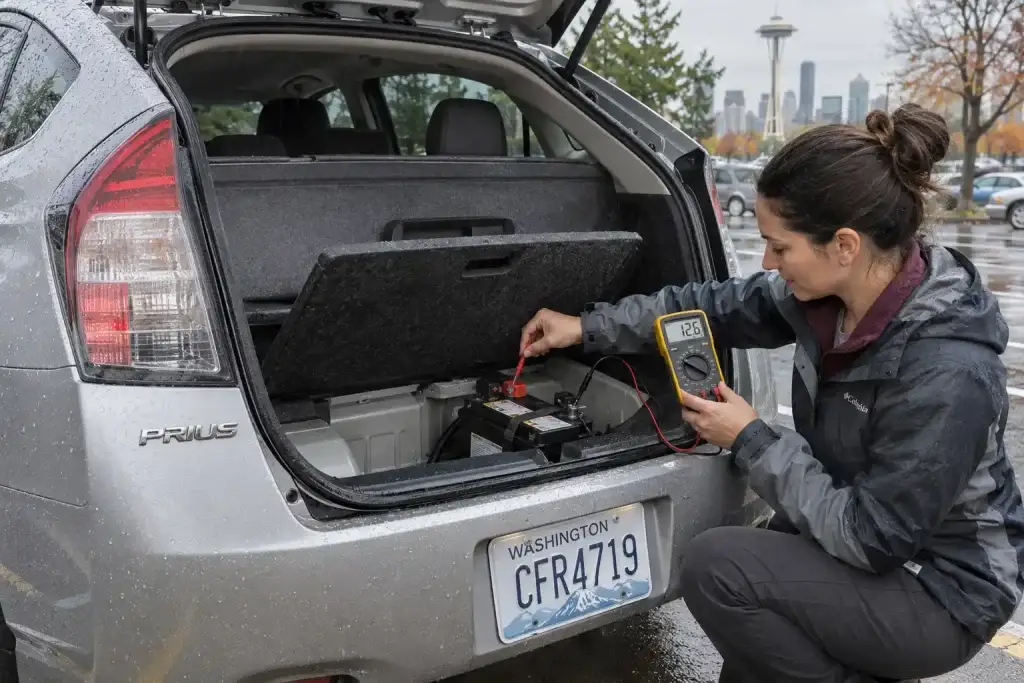
When a Toyota hybrid will not go into READY mode and the dash stays dark, the 12-volt battery is usually the cause. It is tested the same way as a regular car battery, but finding it takes a bit more work:
- Prius: Toyota’s roadside guides place the 12-volt battery in the cargo area.
- Camry Hybrid (earlier models): Toyota’s guides place it in the trunk, behind a cover on the passenger side.
- Other models: Check your owner’s manual. Many Toyota hybrids also have a remote positive jump terminal in the engine bay fuse box.
For the most accurate reading, test at the battery itself, not at the jump terminal. Never touch or open anything marked with orange high-voltage cables. If you drive an electrified pickup, our Toyota hybrid truck guide compares how those systems differ.
How to Check Car Battery Life and Age
Even a battery that tests fine today has a limited life. AAA says most car batteries last three to five years. In hot southern climates, about three years is typical. In cooler northern states, five years or more is common.
Heat is harder on batteries than most people think. It speeds up the chemical wear inside. Vibration from a loose hold-down clamp and lots of short trips also shorten battery life.
How to Find Your Battery’s Age
Look for a sticker or stamped code on the top or side of the case. Many batteries show the month and year they were made or sold, such as 06/23. Some use a letter for the month (A for January, B for February and so on) followed by a number for the year. If the code is unclear, the receipt or the store that sold it can tell you.
How Often Should You Test Your Battery?
- Once the battery turns three, test it at least once a year.
- Test it before winter and before summer road trips.
- Test it right away if you notice slow cranking or any warning sign above.
When it is time for a new one, choose the same size and type your car came with. Old batteries should never go in the trash. According to Battery Council International, lead batteries are recycled at a rate of about 99%, and most stores that sell batteries take the old one back.
Frequently Asked Questions
How do you test a car battery at home?
The easiest way is with a multimeter. Let the car sit for an hour, set the meter to 20V DC and touch the probes to the matching terminals. A reading of 12.6 volts or more means the battery is fully charged.
Can I test my car battery without a multimeter?
Yes. Watch how much your headlights dim while the engine cranks, check the battery’s built-in charge indicator if it has one, or read live voltage with a cheap OBD2 scanner. For a real health check, most auto parts stores will test it for free.
What voltage means a car battery is bad?
A resting reading below about 12.0 volts means the battery is deeply discharged. If it drops below that again after a full charge, or falls under about 9.6 volts while cranking, the battery is likely worn out.
Why does my battery read 12.6 volts but my car will not start?
Voltage shows charge, not strength. An aging battery can look full on a meter and still lack the power to crank the engine. A load test or conductance test will show its real condition. Also check for loose or corroded cable ends.
How long does a car battery last?
Most last three to five years. Heat shortens battery life, so drivers in hot states often replace them closer to three years.
How often should I check my car battery?
Check the terminals for corrosion every few months. Once the battery is three years old, have it tested at least once a year and before extreme summer or winter weather.
Can a completely dead battery be recharged?
Often, yes, if it has not been dead for long. A battery left flat for weeks can lose capacity for good. Charge it fully, let it rest and test again. If it will not hold the charge for a day or two, replace it.
Test It Before It Strands You
Now you know how to test car battery health in a few minutes. Let it rest, measure the voltage, check it while cranking and confirm the alternator is charging. If you do not own a multimeter, use the headlight test or stop by a parts store for a free check.
A $15 multimeter and five minutes a year can save you from a no-start, a jump from a stranger or paying how much it costs to tow a car to the shop. For more simple checks you can do in your own driveway, browse our Owner Guides.