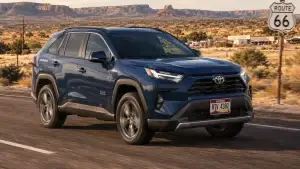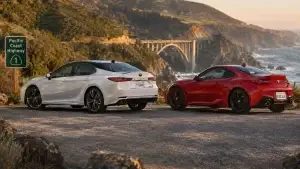
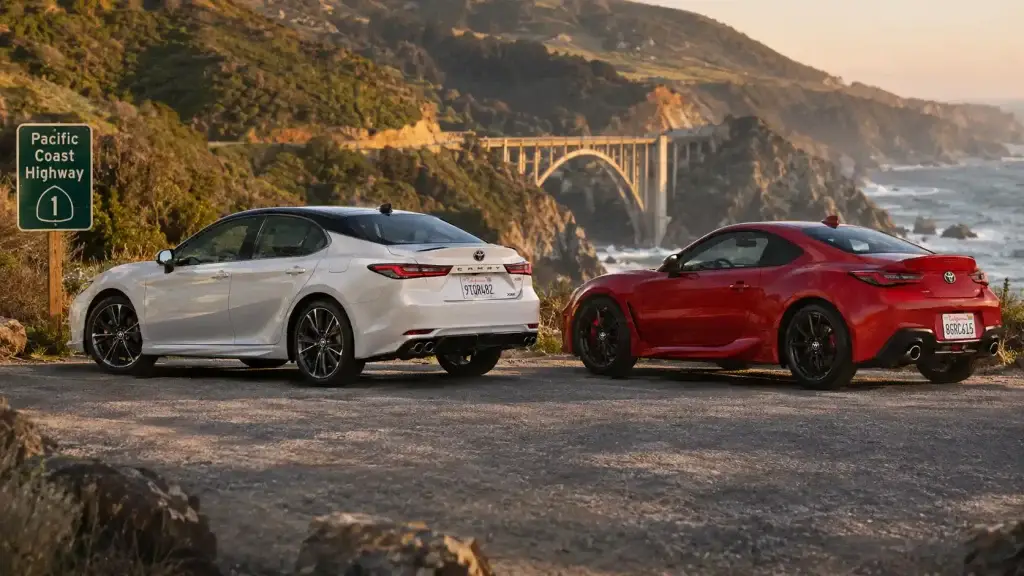
You are looking at two cars on a lot. One has four doors. The other has two doors and a roof that slopes down toward the trunk. The window sticker calls one a sedan and the other a coupe.
So what is the real difference? It is more than a door count, and the names are not as strict as they used to be. This guide breaks down the sedan vs coupe question in plain terms, so you know exactly what you are buying.
Quick answer: A sedan usually has four doors, a full back seat and a separate trunk. A coupe usually has two doors, a sloping roof and a smaller back seat, or no back seat at all. An engineering standard draws the line at 33 cubic feet of rear seat space. In real life, automakers often pick whichever name sells better.
What Is a Sedan?
A sedan is a passenger car with a fixed roof and three separate sections. The engine sits up front, people sit in the middle and cargo goes in a closed trunk at the back. Designers call this a “three-box” shape.
Most sedans have four doors and seat five people. The back seat is built for adults, not just for bags or kids. The name likely comes from the sedan chair, an enclosed seat that porters carried through city streets hundreds of years ago.
The Toyota Camry, Toyota Corolla and Honda Accord are classic examples. If you want a close look at one, our review of the 2027 Toyota Camry shows what a modern midsize sedan offers.
What Is a Coupe?
A coupe is also a fixed-roof car with a trunk, but it is built with style and driving feel first. It usually has two long doors and a roof that sweeps down toward the rear. The car often sits lower to the ground.
The word comes from the French couper, which means “to cut.” It first described a horse-drawn carriage that was cut short, with room for only two riders. That idea still fits. A coupe gives up some space to look and feel sportier.
Some coupes have a small back seat. This layout is called a 2+2, meaning two full seats up front and two tight seats in back. Others, like many sports cars, only have two seats. The Toyota GR86, Toyota GR Supra, Ford Mustang and BMW 4 Series Coupe are well known examples.
Sedan vs Coupe Difference at a Glance
| Feature | Sedan | Coupe |
|---|---|---|
| Doors | Usually 4 | Usually 2 |
| Roofline | Taller, more upright | Lower, sloping toward the trunk |
| Seats | Usually 5 | 2 or 4 |
| Back seat | Full size, adult friendly | Small or none |
| Rear volume (SAE rule) | 33 cubic feet or more | Less than 33 cubic feet |
| Trunk | Larger in most cases | Smaller in most cases |
| Driving feel | Smooth and comfortable | Sportier and more driver focused |
| Best for | Families, commuters, ride sharing | Singles, couples, weekend fun |
The 33 Cubic Feet Rule, Explained
You may have heard that a car with less than 33 cubic feet of interior space is a coupe. That is close, but it misses one key detail.
The rule comes from SAE J1100, a vehicle measuring standard from the Society of Automotive Engineers. It looks at rear interior volume, which is the space for back seat passengers. It does not count the whole cabin. A two-door car with 33 cubic feet or more of rear space is technically a two-door sedan, not a coupe.
Here is the catch. Automakers do not have to follow this rule in their marketing. That is why you see four-door cars sold as “coupes” and very few cars sold as “two-door sedans.”
The US government uses a different system. The EPA sorts cars into size classes, such as compact, midsize and large, based on total passenger and cargo volume. You can see those classes on FuelEconomy.gov. Those labels tell you about size, not body style, so a coupe and a sedan can land in the same class.
7 Real Differences Between Sedans and Coupes
The coupe and sedan difference shows up in daily life more than on a spec sheet. Here is what you will actually notice.
1. Doors and Getting In
A sedan has four shorter doors. Back seat riders get in and out on their own. A coupe has two long doors, so rear passengers have to wait while a front seat folds forward.
Those long doors also need more room to swing open. In a tight parking spot or a narrow garage, that can get annoying fast.
2. Roofline and Looks
This is the big reason people buy coupes. The low, sloping roof gives the car a fast look even when it is parked. Sedans have a taller roof that stays flat longer before it drops to the trunk.
That sleek roof has a cost. Rear headroom shrinks, and the rear window is often smaller, which can hurt your view out the back.
3. Back Seat Room
A sedan back seat usually fits three people, and adults can ride there for hours. A coupe back seat, if it has one, is best for kids, short trips or a gym bag.
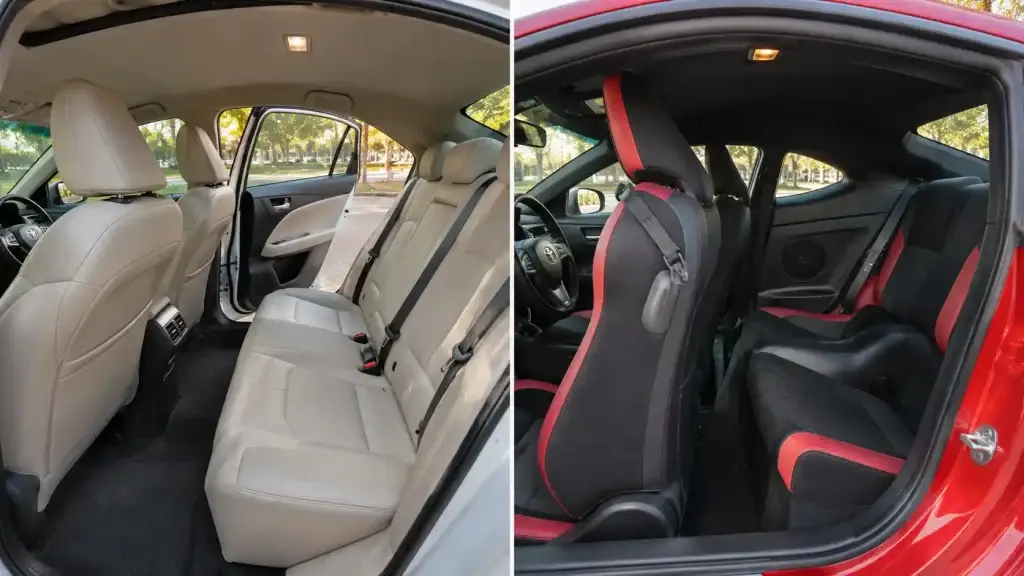
If you use a child car seat, test it in person. Lifting a child over a folded front seat every day gets old quickly.
4. Trunk Space
Sedans are usually longer, so they tend to have bigger trunks. A coupe trunk is often fine for groceries or a weekend bag, but a family road trip is a different story. Always compare the cargo numbers on the actual models you are considering.
5. Driving Feel and Performance
Coupes are often shorter, lighter and lower than sedans. That helps them turn in quickly and feel more connected to the road. Many coupes also come with stronger engines and stiffer suspensions.
Sedans focus more on a smooth, quiet ride. Many sedans now offer sport trims too, so the gap is smaller than it used to be. A sporty sedan can be quicker than a basic coupe.
6. Insurance Cost
Coupes often cost more to insure. Insurers look at things like the car’s power, repair costs and claim history for that model. Sporty two-door cars tend to score higher on those risks.
Your own rate depends on your age, driving record, location and coverage. The only way to know for sure is to get quotes on the exact cars you are comparing before you buy.
7. Choices and Resale
US buyers have shifted toward SUVs and trucks, and many brands have dropped their coupes. That means fewer new coupes to pick from. Sedans still come in more sizes and price points.
Resale is harder to predict. A popular sports coupe can hold its value well, while a plain two-door version of a family car may not. Check used prices for the specific model and year.
When the Labels Get Blurry
The coupe vs sedan difference used to be simple. Today, marketing has mixed the terms. Here are the names you will run into.
- Four-door coupe: A sedan with a low, sloping roof. The BMW 4 Series Gran Coupe and Mercedes-Benz CLA are examples. By the classic definition, these are sedans.
- Two-door sedan: A two-door car with a full back seat. Older cars used this name often. You rarely see it in ads today.
- Quad coupe: A coupe with small rear-hinged back doors. The Mazda RX-8 is the best known example.
- Hardtop: A two-door car with no center pillar between the front and rear side windows. With the windows down, the side is fully open.
- Coupe SUV: An SUV with a sloping rear roof, such as the BMW X6 or Mercedes-Benz GLE Coupe. It borrows the look, not the layout.
The lesson is simple. Ignore the badge and look at the car itself. Count the doors, sit in the back seat and open the trunk.
Civic Coupe vs Civic Sedan, a Real World Example
The Honda Civic is a great way to see the difference between a coupe and sedan on the same car. For years, Honda sold both versions side by side.
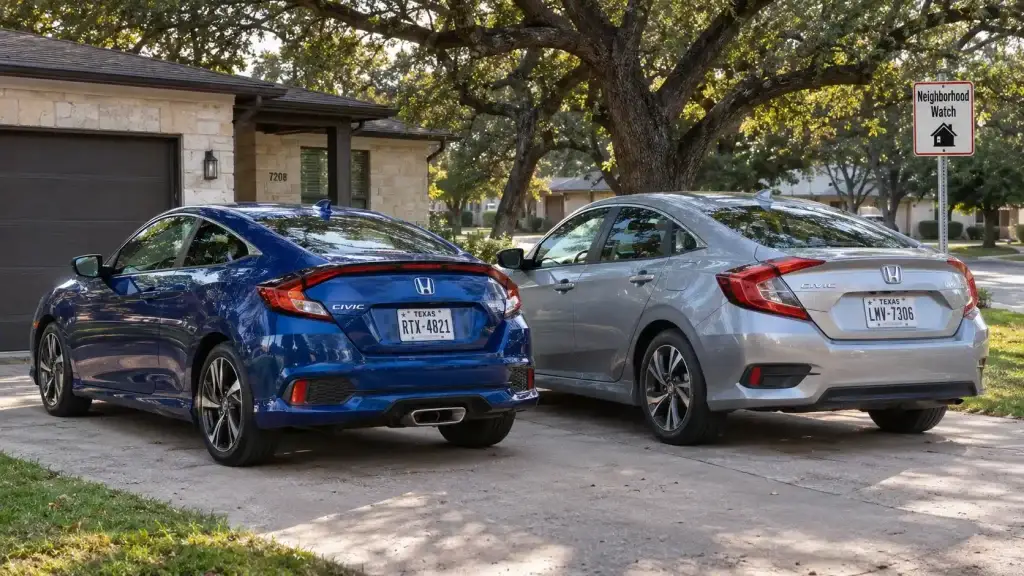
The Civic coupe had two doors, a lower roof and a shorter body. Its back seat and trunk were smaller. The Civic sedan had four doors, more rear headroom and an easier back seat to reach. Under the skin, both shared the same basic engines and features.
Honda dropped the Civic coupe after the 2020 model year. The current Civic comes as a sedan or a hatchback. If you shop for a used Civic coupe, you are choosing style over space on the same reliable car. The Honda Accord coupe followed a similar path and ended after the 2017 model year.
Sedan, Coupe, Hatchback, SUV and Truck Compared
If you are still deciding on a body style, it helps to see sedans vs coupes next to the other common choices.
| Body style | Doors | Cargo access | Best for |
|---|---|---|---|
| Sedan | 4 | Closed trunk | Commuting, small families |
| Coupe | 2 | Closed trunk | Style and driving fun |
| Hatchback | 3 or 5 | Rear hatch that lifts with the glass | Flexible cargo in a small car |
| SUV | 5 | Large rear liftgate | Families, bad weather, extra space |
| Truck | 2 or 4 | Open bed | Towing, hauling, work |
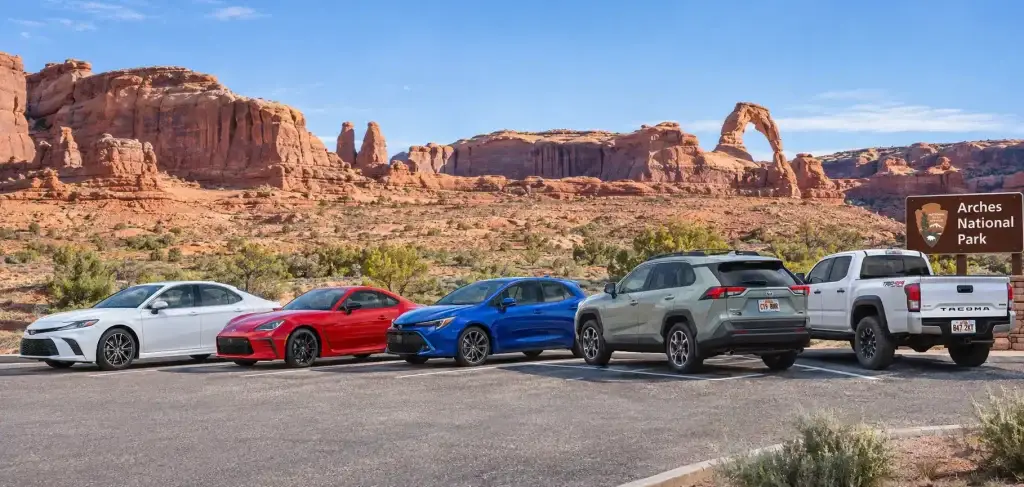
A hatchback is often the middle ground. It is about the size of a small sedan but carries much more because the whole back opens up. If you need even more room, see our breakdown of RAV4 trim levels for a look at one of the best selling SUVs in the country. For towing and hauling, our Toyota hybrid truck guide compares the Tacoma and Tundra.
Sedan or Coupe, Which One Should You Buy?
There is no wrong answer here. It comes down to how you live and who rides with you.
Choose a sedan if you:
- Carry passengers in the back seat often
- Use child car seats
- Want more trunk space for trips and errands
- Care about a quiet, comfortable daily commute
- Want the widest choice of new and used models
Choose a coupe if you:
- Mostly drive alone or with one passenger
- Love the look of a low, sleek car
- Want a sportier, more connected driving feel
- Are fine with a smaller back seat and trunk
- Have checked insurance quotes and the cost works for you
Smart Checks Before You Buy Either One
The coupe car vs sedan choice is easier once you test the car in your real life. Run these quick checks at the dealer.
- Sit in the back seat yourself. If you plan to carry adults, ride back there for a few minutes.
- Install your car seat. Bring it along and check how hard it is to reach.
- Open the doors in a tight space. Long coupe doors can be a problem in small garages.
- Load the trunk. Bring a stroller, suitcase or golf bag if you carry one often.
- Get insurance quotes first. Compare the exact models side by side.
- Check crash test ratings. Body style alone does not tell you how safe a car is. Look up the exact model on the IIHS ratings page.
Buying used? Our owner guides cover what to check before you pay for a pre-owned car.
Frequently Asked Questions
What is the main difference between a sedan and a coupe?
A sedan usually has four doors and a full back seat. A coupe usually has two doors, a sloping roof and a smaller back seat. The technical line is 33 cubic feet of rear interior space.
Can a coupe have four doors?
Yes, in marketing terms. Automakers call some sloped-roof sedans “four-door coupes.” By the traditional definition, those cars are sedans with a coupe-style roof.
Is a coupe always a two-seater?
No. Many coupes have a small back seat with room for two people, called a 2+2 layout. Pure sports cars may have only two seats.
Are coupes more expensive than sedans?
Not always. A coupe can cost more than a sedan with the same badge because it often comes with sportier parts. Insurance on a coupe is also often higher. Compare exact models and trims.
Are coupes less safe than sedans?
Body style alone does not decide safety. Crash test results, safety features and the size of the car matter more. Check IIHS and NHTSA ratings for the specific model.
Is a hatchback a sedan or a coupe?
Neither. A hatchback has a rear door that lifts up with the back window attached. Sedans and coupes have a separate trunk lid below the rear window.