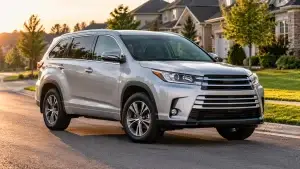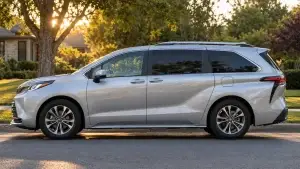
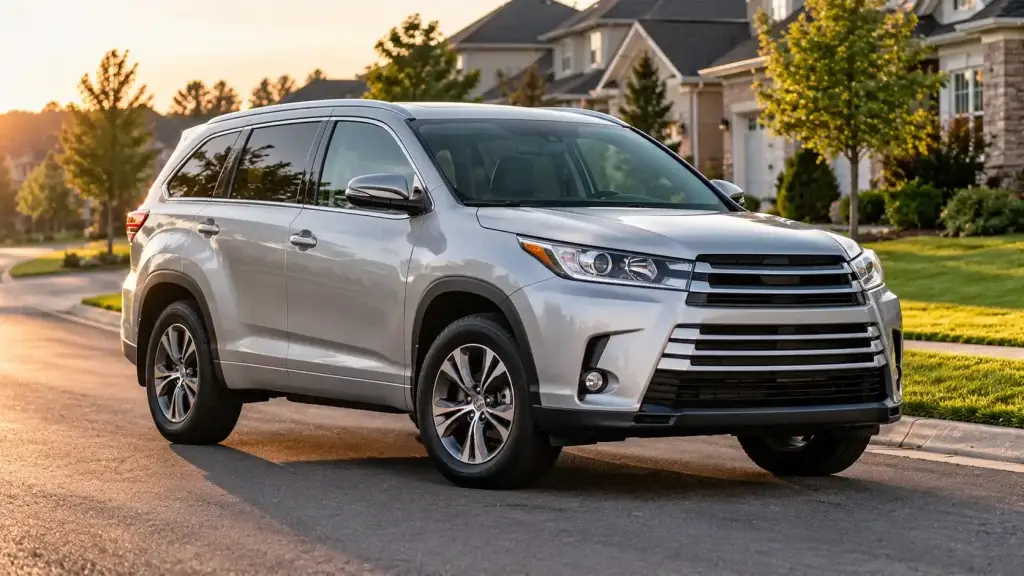
The 2018 Toyota Highlander is one of the safest bets you can make on a used three-row SUV. It seats up to eight people, offers a smooth 295 hp V6 and has a strong record for reliability. Plenty of examples are still on the road past 200,000 miles.
It is not perfect, though. It has no Apple CarPlay or Android Auto, the third row is tight for adults and the base four-cylinder feels slow. Prices also swing a lot between trims and mileage.
This guide covers what you need before you buy. You will find specs, fuel economy by engine, every trim with its original price, towing limits, recalls, common problems, what it is worth today and a step-by-step inspection checklist.
Quick verdict: Buy an XLE V6 for the best mix of features and price. Pick the Hybrid if you drive mostly in town. Skip the four-cylinder LE unless a low price matters more than anything else.
2018 Toyota Highlander at a Glance
| Spec | 2018 Toyota Highlander |
| Vehicle type | Midsize three-row SUV, 4 doors |
| Generation | Third generation (2014 to 2019), updated for 2017 |
| Seating | 7 or 8 passengers |
| Engines | 2.7L 4-cylinder (185 hp), 3.5L V6 (295 hp), 3.5L V6 Hybrid (306 hp total) |
| Transmissions | 6-speed automatic (4-cylinder), 8-speed automatic (V6), CVT (Hybrid) |
| Drive | Front-wheel drive standard, AWD on V6, AWD standard on Hybrid |
| Combined MPG | 22 (4-cylinder), 22 to 23 (V6), 28 to 29 (Hybrid) |
| Max towing | 1,500 lb (4-cylinder), 3,500 lb (Hybrid), 5,000 lb (V6) |
| Cargo space | 13.8 / 42.3 / 83.7 cu ft (behind 3rd row / 2nd row / 1st row) |
| Fuel tank | 19.2 gallons (gas models) |
| Length / wheelbase | 192.5 in / 109.8 in |
| Ground clearance | 8.0 in |
| Original MSRP (gas) | $31,230 to $46,860, before destination |
| Safety ratings | 5-star overall (NHTSA), 2018 Top Safety Pick (IIHS) |
| Factory warranty when new | 3 yr/36,000 mi basic, 5 yr/60,000 mi powertrain, 8 yr/100,000 mi hybrid parts |
What Changed for 2018?
Almost nothing. The big update came one year earlier. For 2017, Toyota added a new direct-injection V6, an 8-speed automatic, a refreshed front end, the sporty SE trim and the Toyota Safety Sense P (TSS-P) driver aid suite as standard.
The 2018 Toyota Highlander carried all of that over unchanged. The 2019 model is also nearly the same.
Buyer tip: Shop 2017, 2018 and 2019 Highlanders side by side. They share the same engines, safety tech and cabin, so let mileage, condition and price decide.
Engines, Performance and Fuel Economy
You get three powertrains to choose from. Each one suits a different kind of driver.
2.7L Four-Cylinder (LE Only)
The base engine makes 185 hp and 184 lb-ft of torque. It pairs with a 6-speed automatic and comes with front-wheel drive only.
It works for light commuting. With a full cabin or on a steep on-ramp, it feels strained. It can also tow only 1,500 pounds. Few were built, so you will not see many for sale.
3.5L V6 With 8-Speed Automatic
This is the engine most buyers should want. It makes 295 hp and 263 lb-ft of torque, which is 25 hp more than the pre-2017 V6. It uses both direct and port fuel injection.
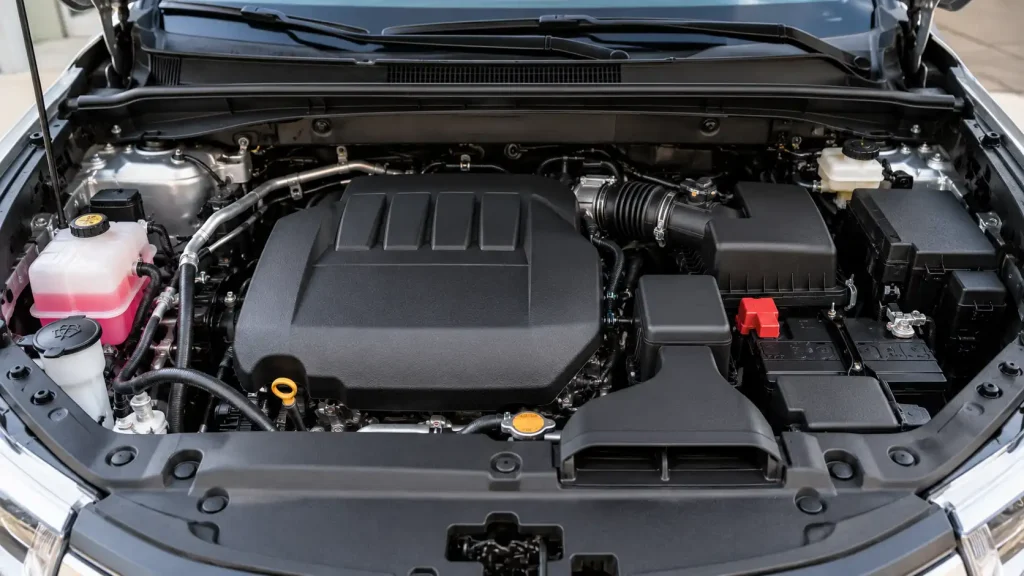
The 8-speed gearbox keeps the engine in its sweet spot. Passing and merging feel easy, even with the family on board. Every V6 trim except the LE also has auto stop-start to save fuel at red lights.
V6 models offer Dynamic Torque Control AWD. It runs in front-wheel drive while cruising to save fuel. When it senses slip, it can send up to 50% of the power to the rear wheels. An AWD LOCK button holds a 50:50 split at speeds up to 25 mph for snow or mud.
Highlander Hybrid
The 2018 Toyota Highlander Hybrid pairs the 3.5L V6 with electric motors for 306 total horsepower. AWD is standard. A separate electric motor drives the rear wheels when extra grip is needed.
It came in LE, XLE, Limited and Limited Platinum trims. It is the best pick for city and suburban driving, where the hybrid system does most of its work. If you are new to hybrids, read our guide on how Toyota hybrid technology works.
2018 Toyota Highlander MPG by Version
| Version | City MPG | Highway MPG | Combined MPG |
| Hybrid LE (AWD) | 30 | 28 | 29 |
| Hybrid XLE, Limited, Platinum (AWD) | 29 | 27 | 28 |
| V6 FWD | 20 to 21 | 27 | 23 |
| V6 AWD | 19 to 20 | 26 | 22 |
| 2.7L 4-cylinder FWD | 20 | 24 | 22 |
These are EPA estimates from when the vehicle was new. The V6 actually beats the four-cylinder on the highway. With its 19.2-gallon tank, a V6 AWD model can cover roughly 420 miles on a tank in mixed driving.
Article, part 2
2018 Toyota Highlander Trims Explained
The gas model came in six trims. Each one builds on the trim below it. Prices below are the original MSRPs before the $1,095 destination fee.
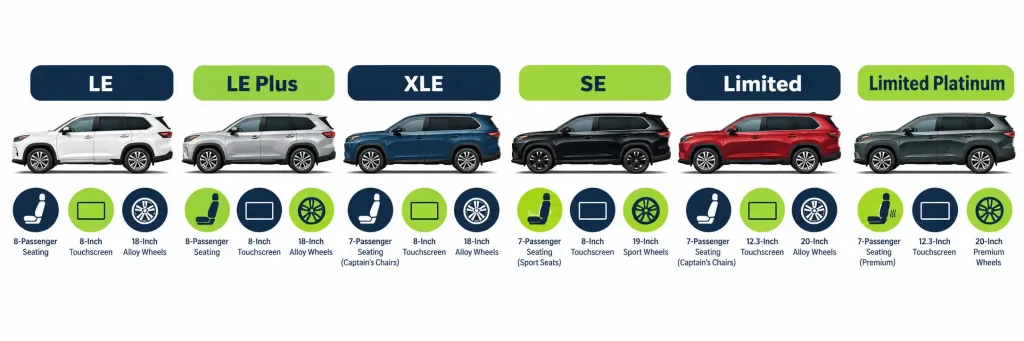
| Trim | Original MSRP (FWD / AWD) | What it adds |
| LE | $31,230 (4-cyl), $33,280 V6 / $34,740 V6 | 18-inch alloys, 6.1-inch touchscreen, Bluetooth, backup camera, TSS-P safety suite, 8 seats, 5 USB ports |
| LE Plus | $35,660 / $37,120 | 8-inch screen, SiriusXM and HD Radio, tri-zone auto climate, power liftgate with flip-up glass, fog lights, 8-way power driver seat |
| XLE | $39,120 / $40,580 | Leather seats, heated front seats, push-button start, moonroof, navigation, Blind Spot Monitor, Rear Cross Traffic Alert, Driver Easy Speak |
| SE | $40,290 / $41,750 | Sport-tuned suspension, 19-inch black wheels, dark exterior trim, black leather with silver stitching, 7 seats |
| Limited | $42,280 / $43,740 | 19-inch chrome-finish wheels, ventilated front seats, driver memory, JBL audio, rear parking sensors, ambient lighting, captain’s chairs |
| Limited Platinum | $45,400 / $46,860 | 360-degree camera, panoramic roof, heated steering wheel, heated second row, rain-sensing wipers |
The Hybrid came in LE, XLE, Limited and Limited Platinum trims. Each one mirrors the features of its gas twin, with AWD as standard.
Which 2018 Highlander Trim Should You Buy?
The right trim depends on your budget and how you use the SUV. Here are our picks.
- Best overall: XLE V6. You get leather, heated seats, a sunroof, navigation and blind spot monitoring. It is also the most common trim for sale, so finding a clean one is easy.
- Best on a budget: LE Plus V6. It adds the power liftgate, tri-zone climate and the bigger screen for a few thousand dollars less than an XLE.
- Best for city drivers: Hybrid XLE. Expect about 28 mpg combined with standard AWD.
- Best for drivers who enjoy the road: SE. The firmer suspension makes it feel less floaty in corners without ruining the ride.
- Best for comfort: Limited or Limited Platinum. Ventilated seats, JBL sound and the 360-degree camera make daily life easier.
- Skip unless the price is right: LE four-cylinder. It is slow, tows little and does not even save fuel on the highway.
Interior, Seating and Cargo Space
The cabin is one of the 2018 Highlander’s best traits. The front seats are supportive on long drives, and the second row slides in one step to open a path to the third row.
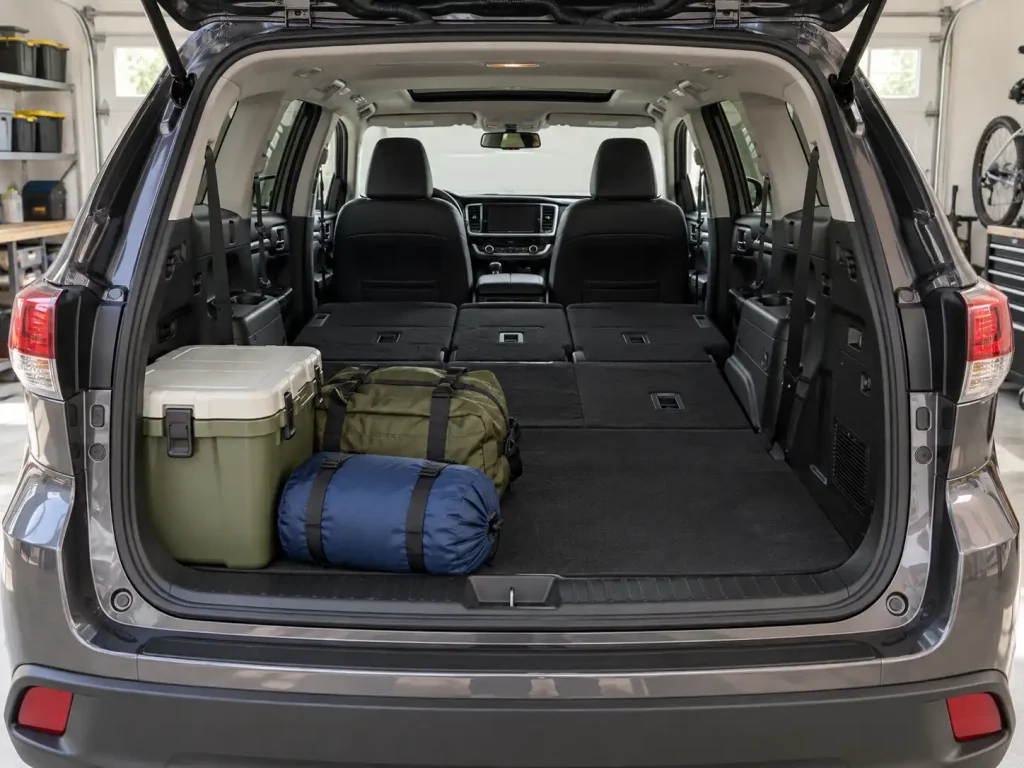
You can get seating for eight with a second-row bench, or seven with captain’s chairs. The third row works well for kids. Most adults will find it cramped on anything longer than a short trip.
Smart storage stands out. A shelf runs the width of the dashboard for phones and keys. The center console is big enough to swallow a large handbag. Five USB ports keep devices charged across the rows.
Cargo space is decent for the class. With all seats up, you get 13.8 cubic feet, enough for groceries or a folded stroller. Fold both rear rows and it opens to 83.7 cubic feet. Larger rivals offer more room behind the third row, so measure your gear if you haul a lot.
XLE and higher trims include Driver Easy Speak. It sends the driver’s voice through the rear speakers, so you do not have to shout at the third row.
Technology and Infotainment
All trims use Toyota’s Entune system. The LE gets a 6.1-inch touchscreen, while the LE Plus and up get an 8-inch screen. XLE and higher trims add built-in navigation. Limited trims add a JBL sound system. A rear-seat Blu-ray entertainment system was optional on the XLE and SE.
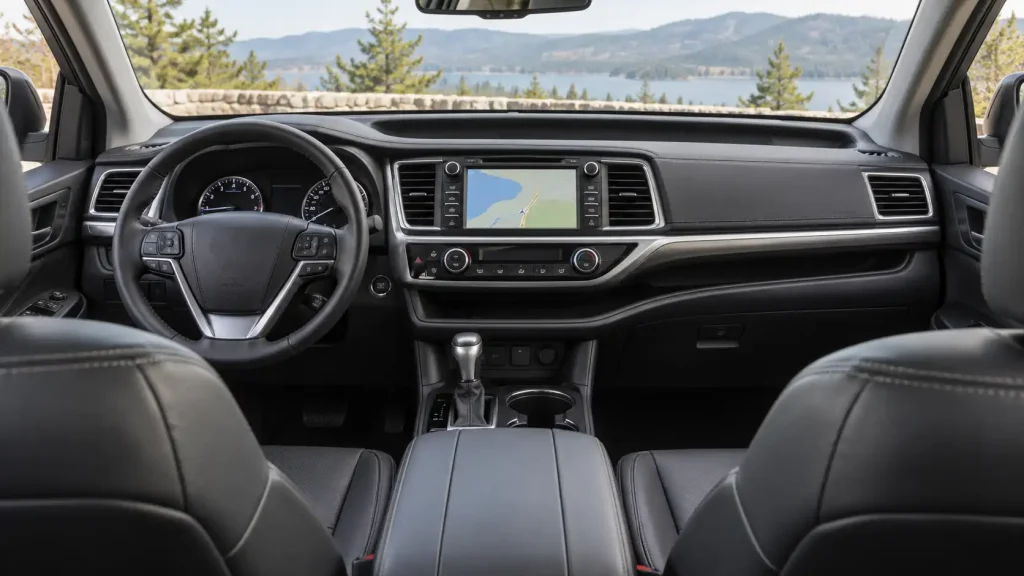
The big miss is smartphone mirroring. The 2018 Toyota Highlander does not support Apple CarPlay or Android Auto. Toyota added both when the Highlander was redesigned for 2020.
If you need phone mirroring, you have two options. Aftermarket upgrade kits can add CarPlay and Android Auto to the factory 2014 to 2019 screen. A good phone mount with Bluetooth audio is the cheaper fix.
Safety Features and Crash Ratings
Safety is a major reason families pick this SUV. Every 2018 Toyota Highlander came with Toyota Safety Sense P. It includes:
- Pre-Collision System with Pedestrian Detection, which can brake on its own
- Lane Departure Alert with Steering Assist
- Dynamic Radar Cruise Control, an adaptive cruise system
- Automatic High Beams
A backup camera is standard. XLE and higher trims add Blind Spot Monitor with Rear Cross Traffic Alert. The Limited Platinum adds a Bird’s Eye View Camera with Perimeter Scan.
| Crash test | Rating |
| NHTSA overall | 5 stars |
| NHTSA frontal crash | 4 stars |
| NHTSA side crash | 5 stars |
| NHTSA rollover | 4 stars |
| IIHS award | 2018 Top Safety Pick |
The Highlander earned its IIHS award with standard equipment. That means even a base LE has the same core crash-avoidance tech as a loaded Platinum.
2018 Toyota Highlander Towing Capacity
Towing depends on the engine, not the trim.
| Engine | Max towing |
| 2.7L 4-cylinder | 1,500 lb |
| 3.5L V6 Hybrid | 3,500 lb |
| 3.5L V6 | 5,000 lb |
A V6 model can pull a small camper, a pair of jet skis or a utility trailer. Many used examples were never fitted with a hitch, so check for a receiver and wiring harness. Toyota sold both as a dealer accessory.
For regular trips with a heavy trailer, stay well under the 5,000-pound limit. Payload and tongue weight also count, since passengers and cargo cut into what the SUV can safely carry.
Article, part 3
Reliability: How Dependable Is the 2018 Highlander?
Very dependable, by most measures. Owner reviews on major car sites average well above 4 out of 5, and reliability is one of the most praised traits. Both engines use a timing chain, not a belt, so there is no costly belt swap at 100,000 miles.
Industry repair data puts the odds of an unplanned repair in a given year at about one in four, with an average bill under $800. That is a little higher than the midsize SUV average, mostly because these vehicles are now eight years old.
2018 Toyota Highlander Common Problems
No widespread engine or transmission failures stand out. Still, owners do report a handful of repeat issues. Know them before you buy.
- Brake vibration and warped front rotors. Some drivers feel a shake through the wheel when braking lightly at highway speed. Toyota issued a service bulletin for this on 2014 to 2018 Highlanders.
- Power liftgate faults. The liftgate may stop opening or closing because of a worn switch or motor.
- Infotainment glitches. Owners report screens going blank, navigation freezing and blown or distorted speakers.
- Battery drain. A few owners report a parasitic draw that leaves the battery dead after the SUV sits.
- Oil leaks on the V6. These are rare, but some repairs need major engine work and get expensive.
- Rough low-speed shifts. Some drivers notice harsh or hesitant shifts from the 8-speed automatic in stop-and-go traffic.
- Headlight condensation. Moisture inside a headlight lens shows up on some examples.
2018 Highlander Recalls
NHTSA lists four recall campaigns for the 2018 Highlander. Recall repairs are free at any Toyota dealer, no matter the age or owner.
| NHTSA campaign | Problem | Fix |
| 20V-682 | Expanded fuel pump recall. The pump can fail and stall the engine while driving | Fuel pump replaced |
| 20V-012 | Low-pressure fuel pump may fail, causing a stall | Fuel pump replaced |
| 18V-211 | Brake vacuum pump may fail, cutting power brake assist (about 6,000 vehicles) | Vacuum pump replaced |
| 17V-831 | Incorrect vehicle label on a small batch (about 650 vehicles) | Correct label installed |
A separate equipment recall covered certain aftermarket replacement windshields sold for 2014 to 2018 Highlanders. Enter any VIN on the NHTSA recall lookup tool to see open recalls for that exact vehicle.
How Much Is a 2018 Toyota Highlander Worth Today?
Most dealer listings fall between about $17,000 and $27,000 as of late 2026. Mileage, trim, accident history and region move the price more than anything else. Most examples for sale have 80,000 to 140,000 miles on them.
| Trim | Typical dealer price, average miles (approx.) |
| LE | $16,000 to $21,000 |
| LE Plus | $17,000 to $22,000 |
| XLE | $18,500 to $26,000 |
| SE | $19,000 to $26,000 |
| Limited | $20,000 to $28,000 |
| Limited Platinum | $21,500 to $29,000 |
| Hybrid (all trims) | $18,000 to $27,000 |
These are estimates based on listings and valuation data we reviewed in October 2026. Rare low-mileage examples under 50,000 miles can ask $28,000 to $35,000. A typical XLE AWD has lost close to half of its $40,580 original price.
Used 2018 Toyota Highlander Buying Checklist
Use this list when you inspect and test drive a used 2018 Highlander. For more checks before you buy, browse our Toyota owner guides.
- Run the VIN. Check for open recalls, accidents, flood or salvage titles and the number of owners.
- Confirm the engine from the VIN. On the listings we checked, the 5th character was “A” for the 2.7L four-cylinder, “Z” for the gas V6 and “G” for the Hybrid. Confirm with a VIN decoder before you buy.
- Ask for service records. Look for regular oil changes with 0W-20 synthetic oil.
- Test the brakes at highway speed. Any shake in the steering wheel points to worn or warped front rotors.
- Work the power liftgate several times. It should open and close smoothly with no stalls.
- Test all the tech. Check the touchscreen, backup camera, every USB port, Blind Spot Monitor lights and all speakers.
- Drive in stop-and-go traffic. Watch for harsh or delayed shifts. On AWD models, press the AWD LOCK button and confirm it shows on the dash display.
- Look under the hood and under the SUV. Check for oil seepage around the V6 and moisture inside the headlights.
- Check tire age. Find the four-digit date code on each sidewall. Old tires can look fine and still be unsafe.
- Hybrid buyers, check the battery. The 8-year/100,000-mile hybrid parts warranty has run out or will soon. Ask a Toyota dealer to check the hybrid battery health and clean its cooling vent.
- Get a pre-purchase inspection. An independent mechanic can spot problems a test drive will miss.
2017 vs 2018 vs 2019 vs 2020 Highlander: Which Year to Buy?
| Model year | What is different | Who it suits |
| 2017 | First year of the new V6, 8-speed and standard TSS-P | Buyers who want the same SUV for less money |
| 2018 | Carryover of the 2017 | Buyers who want the proven setup with fewer miles than a 2017 |
| 2019 | Carryover, final year of the third generation | Buyers who want the newest third-gen example |
| 2020 | Full redesign with Apple CarPlay, Android Auto and a new four-cylinder hybrid rated above 30 mpg | Buyers who need phone mirroring and can spend more |
If phone mirroring is a must, stretch for a 2020 or newer. If not, a 2017 to 2019 Highlander gives you the same core vehicle for less.
Rivals Worth Cross-Shopping
The Highlander competes with several three-row SUVs from the same years.
- Honda Pilot: More room behind the third row and a smooth V6.
- Chevrolet Traverse: One of the roomiest third rows in the class.
- Volkswagen Atlas: Big, boxy cabin with adult-friendly third-row space.
- Mazda CX-9: Sharper handling and an upscale cabin, but less space.
- Nissan Pathfinder: Often cheaper to buy used.
The Highlander wins on resale value, standard safety tech and its long record of reliability.
Final Verdict
The 2018 Toyota Highlander is a smart buy for families who want a safe, reliable three-row SUV that holds its value. Choose the V6 for power and towing, or the Hybrid for fuel savings. The XLE trim hits the sweet spot for most buyers.
Just go in knowing the limits. The third row is small, there is no CarPlay or Android Auto, and an eight-year-old SUV needs a careful inspection. Find a clean example with good records, and it should serve your family for years.
Frequently Asked Questions
Is the 2018 Toyota Highlander a good SUV to buy used?
Yes. It offers strong reliability, a 5-star overall NHTSA crash rating, standard safety tech and good resale value. Its main drawbacks are a small third row and no Apple CarPlay or Android Auto.
How many miles can a 2018 Toyota Highlander last?
With regular maintenance, 200,000 miles or more is a realistic goal. Many examples are already listed for sale past that mark.
Does the 2018 Toyota Highlander have Apple CarPlay?
No. It has neither Apple CarPlay nor Android Auto. Toyota added both with the 2020 redesign. Aftermarket kits can add them to the factory screen.
What is the towing capacity of the 2018 Highlander?
V6 models can tow up to 5,000 pounds. The Hybrid tows up to 3,500 pounds, and the four-cylinder LE tows up to 1,500 pounds.
What gas mileage does the 2018 Highlander get?
The V6 gets 22 to 23 mpg combined. The Hybrid gets 28 to 29 mpg combined. The four-cylinder gets 22 mpg combined.
Is the 2018 Toyota Highlander a 7 or 8 seater?
Both. Models with a second-row bench seat eight. Models with second-row captain’s chairs seat seven. The SE seats seven only.
Does the 2018 Highlander have a timing belt or a timing chain?
Both the 2.7L four-cylinder and the 3.5L V6 use a timing chain. A chain normally lasts the life of the engine with regular oil changes.
Is the 2018 or 2019 Highlander better?
They are nearly identical. Both share the same engines, safety tech and cabin. Pick the one with lower miles, better records and a fairer price.