
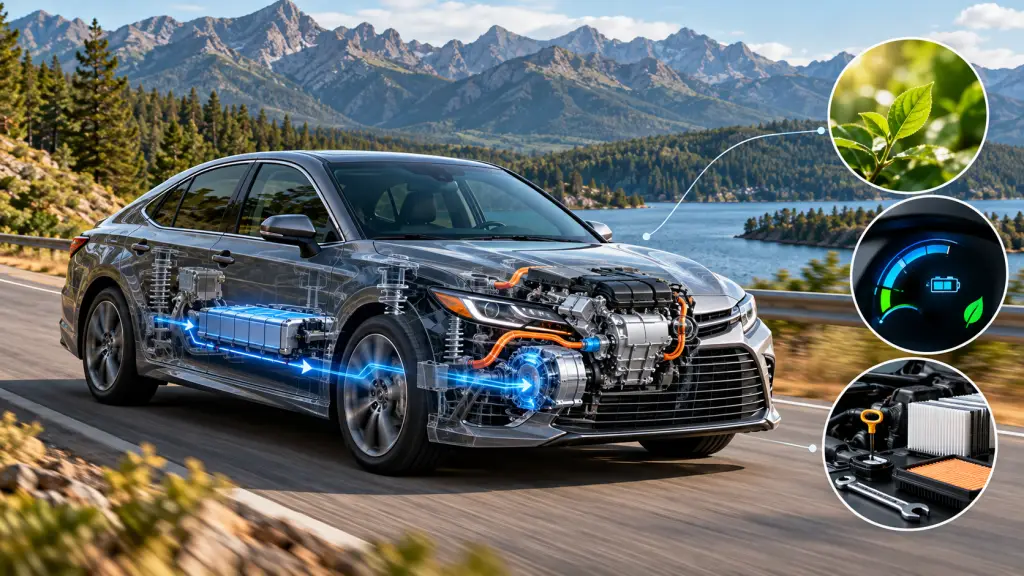
Hybrid technology has changed the way drivers think about fuel efficiency and everyday transportation. By combining a gasoline engine with an electric motor, hybrid vehicles can reduce fuel consumption and tailpipe emissions compared with comparable conventional gasoline vehicles. Toyota has played a major role in bringing this technology to mainstream drivers, beginning with the launch of the Prius in 1997.
Today, Toyota offers hybrid technology across a range of vehicle types, giving drivers more choices when looking for a balance of fuel economy, comfort, practicality and performance. In this guide, we explain how Toyota hybrid systems work, how the technology has evolved, which models offer hybrid options, and what owners should know about maintenance.
The History of Toyota Hybrid Technology
Toyota’s modern hybrid story began in the 1990s, when its engineers worked to develop a vehicle that could use fuel more efficiently without sacrificing everyday usability. The first-generation Prius went on sale in Japan in December 1997, introducing a mass-produced hybrid passenger car to the market.
The Prius combined a gasoline engine with an electric motor and a battery system. Instead of relying exclusively on the engine, the vehicle could use electric power under certain driving conditions and recover some energy during braking. This approach helped establish hybrid technology as a practical alternative for drivers who wanted improved efficiency without depending entirely on an external charging source.
Over time, Toyota expanded hybrid technology beyond the Prius. Hybrid versions of sedans, compact cars, minivans and SUVs gave buyers more ways to choose a vehicle suited to their needs. Toyota also introduced hybrid options in its Lexus luxury lineup.
The technology has continued to develop, with improvements in powertrain control, battery systems, electric motors and overall vehicle performance. The result is a broader range of hybrid vehicles designed for different driving conditions and preferences.
How Toyota Hybrid Technology Works
A conventional gasoline vehicle relies mainly on its engine to move the vehicle. A Toyota hybrid combines a gasoline engine with one or more electric motor-generators and a high-voltage traction battery.
The vehicle’s control system determines how these components work together according to factors such as vehicle speed, acceleration, battery charge and driving conditions.
1. Electric Motor Assistance
At low speeds or during light acceleration, some Toyota hybrids can use electric power alone for limited periods. In other situations, the electric motor assists the gasoline engine to provide responsive acceleration while reducing the amount of work required from the engine.
Electric-only operation depends on the vehicle, battery charge, temperature and driving conditions. It does not mean every Toyota hybrid can travel long distances using electricity alone.
2. Regenerative Braking
When a hybrid slows down, its electric motor can operate as a generator. This process recovers some of the vehicle’s movement energy that would otherwise be lost mainly as heat during braking.
The recovered energy is stored in the hybrid battery and can be used later to power the electric motor. Regenerative braking improves overall energy efficiency, although conventional friction brakes are still needed.
3. Gasoline and Electric Power Working Together
During acceleration, hill climbing or other situations that require more power, the gasoline engine and electric motor can work together. The system automatically adjusts their contribution to balance performance and efficiency.
Drivers generally do not need to switch manually between the two power sources. The vehicle’s hybrid control system manages their operation.
4. Automatic Battery Charging
A conventional Toyota hybrid normally recharges its traction battery through regenerative braking and energy generated by the vehicle’s powertrain. Unlike a plug-in hybrid or a fully electric vehicle, it does not normally need to be connected to an external charger.
This makes a conventional hybrid convenient for drivers who want electric-motor assistance without changing their usual refueling routine.
Main Benefits of Toyota Hybrid Vehicles
Improved Fuel Efficiency
Hybrid technology can reduce gasoline consumption by using electric-motor assistance, recovering braking energy and managing engine operation efficiently. The amount of fuel saved depends on the model, driving style, traffic, weather, terrain and vehicle condition.
City driving with frequent stops can provide opportunities for regenerative braking and electric assistance. Highway fuel economy, meanwhile, depends on the particular vehicle and its speed and driving conditions.
Before buying a hybrid, compare official fuel-economy ratings for the exact model year and trim rather than relying on a general MPG figure.
Reduced Tailpipe Emissions
Because hybrids can burn less gasoline than comparable conventional vehicles, they can produce lower tailpipe carbon dioxide emissions under comparable conditions. Actual results vary by vehicle and how it is driven.
Hybrid vehicles are not completely emissions-free while operating on gasoline. Their overall environmental impact also depends on manufacturing, battery production, fuel use and the electricity and materials used throughout the vehicle’s lifecycle.
Convenient Everyday Driving
Conventional hybrids do not generally require external charging. Owners can refuel at a gasoline station and let the vehicle manage its hybrid system automatically.
This can make a hybrid a practical option for commuters and families who want improved fuel efficiency without needing access to a home charger.
Smooth Performance
The electric motor can deliver power quickly, helping the vehicle respond smoothly when moving away from a stop or accelerating. The gasoline engine and electric motor work together according to the system’s design.
The driving experience differs between models, so a test drive is useful when comparing hybrid vehicles.
Toyota Hybrid Models: Options for Different Drivers
Toyota has offered hybrid powertrains in a variety of models. Availability differs by country and model year, so buyers should check the specifications for the vehicle they are considering.
Toyota Prius
The Prius helped introduce hybrid passenger cars to a global audience. It is commonly associated with fuel efficiency and practical everyday transportation. Buyers should compare the model year, equipment, condition and official fuel-economy rating before making a decision.
Toyota Corolla Hybrid
The Corolla Hybrid combines the familiar compact-sedan format with a hybrid powertrain. It may suit commuters and drivers looking for an efficient everyday vehicle with a manageable footprint.
Toyota Camry Hybrid
The Camry Hybrid offers a larger sedan format, with an emphasis on passenger comfort and everyday practicality. It may be worth considering for drivers who want a midsize sedan with hybrid efficiency.
Toyota RAV4 Hybrid
The RAV4 Hybrid brings hybrid technology to a compact SUV format. It may appeal to drivers who need more cargo space and a higher seating position while still prioritizing fuel economy.
Toyota Highlander Hybrid
The Highlander Hybrid has offered a larger SUV option for families needing additional passenger and cargo space. Seating configurations and availability depend on model year and market.
Lexus Hybrid Models
Toyota’s Lexus luxury division has also offered hybrid versions of selected vehicles. These models combine hybrid powertrains with features and equipment aimed at the luxury segment.
Buying tip: Do not assume every model listed above is available as a hybrid in every market or for every year. Verify the exact model, trim, drivetrain, warranty and fuel-economy figures before purchasing.
Conventional Hybrids vs. Plug-in Hybrids
Hybrid vehicles are not all the same. Understanding the difference between a conventional hybrid and a plug-in hybrid helps buyers choose a system that suits their routine.
Conventional Hybrid Electric Vehicle (HEV)
A conventional hybrid uses a gasoline engine, electric motor and battery. The battery is charged through the vehicle’s powertrain and regenerative braking. It normally does not need an external charging cable.
This type may suit drivers who want better fuel efficiency while continuing to refuel at gasoline stations as usual.
Plug-in Hybrid Electric Vehicle (PHEV)
A plug-in hybrid has a larger battery that can be charged from an external power source. Depending on the model and battery charge, it can travel a certain distance using electricity alone before the gasoline engine is needed.
Toyota has offered plug-in hybrid models such as the Prius Prime and RAV4 Prime in selected markets and model years. Availability and specifications should be checked for the relevant location.
A plug-in hybrid may be useful for drivers who can charge regularly and make many short trips. Drivers who cannot charge it consistently may not achieve the same electric-driving benefits.
Hybrid vs. Fully Electric Vehicle
A fully electric vehicle uses electricity stored in a traction battery to power its electric motor and must be charged from an external source. A conventional hybrid combines gasoline and electric power and does not normally require plugging in.
Neither option is automatically the best choice for every driver. Daily mileage, charging access, purchase price, local fuel and electricity costs, and vehicle needs all matter.
What Owners Should Know About Hybrid Maintenance
Toyota hybrid vehicles still require regular maintenance. Although some parts and operating conditions differ from conventional vehicles, owners should follow the maintenance schedule for their exact model and year.
Follow the Recommended Service Schedule
Keep up with scheduled oil and filter changes where applicable, inspections, tire rotation, brake checks, coolant servicing and other items listed in the owner’s manual. Maintenance requirements vary by vehicle and market.
Check the Hybrid Battery System
The high-voltage traction battery is different from the regular 12-volt battery found in most vehicles. Warning lights, unusual behavior or hybrid-system messages should be checked by a qualified technician familiar with the vehicle’s hybrid system.
Do not attempt to open or repair high-voltage components yourself. These systems can be dangerous without appropriate training and equipment.
Keep Cooling Vents Clear
Some hybrid models use dedicated airflow to help manage battery temperature. If your owner’s manual identifies battery cooling vents, keep them clear and follow the specified cleaning instructions. Do not assume every Toyota hybrid has the same vent location or service procedure.
Look After the Tires and Brakes
Correct tire pressure, wheel alignment and tire condition affect safety and fuel economy. Regenerative braking can reduce the amount of work done by friction brakes in some conditions, but brake components still need routine inspection and maintenance.
Review the Warranty Before Buying Used
When considering a used Toyota hybrid, check the service history, any hybrid-system warning messages, the condition of the 12-volt battery, and the warranty terms that apply in your location. Hybrid-battery coverage and inspection programmes can differ by country, model year and vehicle.
For a used vehicle, a pre-purchase inspection by a qualified technician can help identify issues that may not be obvious during a short test drive.
Do Toyota Hybrids Reduce Environmental Impact?
Hybrid technology can reduce gasoline consumption and tailpipe emissions compared with comparable conventional vehicles, but it is not a complete solution to every environmental challenge.
The overall impact of a vehicle depends on several factors, including fuel consumption, how far it is driven, manufacturing emissions, battery materials, maintenance and end-of-life recycling. A hybrid that uses less fuel during its service life can offer environmental advantages, but results vary by model and use.
Toyota has also pursued broader environmental initiatives involving vehicle electrification, manufacturing and resource use. Its public sustainability goals and progress should be checked against the company’s latest official reporting rather than relying on older target dates or figures.
For readers interested in the wider subject, our guide to Toyota Safety Sense explains driver-assistance features that may be available on selected Toyota models. These safety technologies are separate from the hybrid powertrain and vary by model, trim and year.
Is a Toyota Hybrid Right for You?
A Toyota hybrid may be worth considering if you want to reduce gasoline use, drive frequently in stop-and-go traffic, and avoid the need to charge a conventional hybrid externally.
However, the best choice depends on your circumstances. Compare the purchase price, expected mileage, fuel costs, insurance, maintenance needs and available warranty coverage. A plug-in hybrid may be a better fit if you can charge at home and want electric-only driving for shorter trips. A fully electric vehicle may suit drivers who have dependable charging access and want to avoid gasoline altogether.
For used vehicles, compare specific model years and trims rather than choosing based on the hybrid badge alone. Check maintenance records, vehicle condition and the official specifications for the exact car.
Conclusion
Toyota’s hybrid journey began with the Prius in 1997 and helped bring gasoline-electric technology into mainstream passenger vehicles. By combining a gasoline engine with electric-motor assistance and regenerative braking, Toyota hybrids can offer improved fuel efficiency, reduced tailpipe emissions and convenient everyday driving.
The technology now appears across a variety of vehicle types, while plug-in hybrids provide an additional option for drivers who can charge externally. The right choice depends on driving habits, budget, local availability and long-term ownership needs.
Before buying, verify the specifications and warranty for the exact model year, and follow the manufacturer’s maintenance guidance. Understanding how the system works makes it easier to decide whether a conventional hybrid or plug-in hybrid fits your needs.
ToyotaOutreach.com is an independent publication and is not affiliated with or endorsed by Toyota Motor Corporation. Vehicle specifications, availability, fuel-economy figures and warranty terms vary by model year and market.