A used Toyota Tacoma can be an appealing option for drivers who want a midsize pickup for daily transportation, work, towing within the vehicle’s limits, or outdoor adventures. However, buying a used truck requires more than checking its mileage and exterior condition.
Two Tacomas of the same model year can have very different maintenance histories. One may have detailed service records and mostly highway miles, while another may have spent years towing, driving on rough trails, or operating in areas where road salt accelerates corrosion.
The key to buying wisely is to evaluate the individual truck rather than relying on its reputation alone.
This guide explains how to inspect a used Toyota Tacoma from model years 2005 through 2023, which records to review, what warning signs to watch for, and how the correct workshop manual can help you understand maintenance and repair requirements.
Important: Specifications, available engines, transmissions, safety equipment, and known issues vary by model year, configuration, and market. Verify information using documentation for the exact truck you are considering.
1. Identify the Exact Tacoma Configuration
Before arranging an inspection, establish exactly which Tacoma is being offered for sale.
Between 2005 and 2023, the Tacoma underwent changes in equipment, powertrain options, body styles, and technology. A two-wheel-drive work truck is not necessarily comparable to a four-wheel-drive model with off-road equipment.
Ask the seller for the vehicle identification number (VIN), model year, mileage, engine information, transmission type, and available service records.
Confirm details such as:
- Model year and trim.
- Engine and transmission.
- Two-wheel drive or four-wheel drive.
- Cab and bed configuration.
- Factory towing equipment, if fitted.
- Aftermarket suspension or tyre modifications.
- Accident and ownership history.
- Outstanding recalls or unresolved warning lights.
Do not rely exclusively on a badge attached to the tailgate. Check the vehicle’s documentation and identification information.
If the seller cannot explain the truck’s configuration or refuses to provide basic information needed for verification, treat that as a reason to investigate further.
2. Check the Vehicle History and Service Records
A detailed service history can reveal how well the Tacoma has been maintained and whether important repairs have already been completed.
Ask for receipts, service invoices, inspection reports, and records of major repairs. Compare the recorded mileage and dates to see whether the history is consistent.
Look for documentation covering:
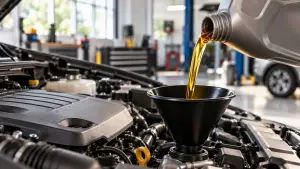
- Engine oil and filter changes.
- Cooling-system maintenance.
- Transmission servicing, where applicable.
- Differential and transfer-case fluid maintenance, where fitted.
- Brake repairs.
- Tyre replacement and alignment.
- Suspension and steering repairs.
- Battery and electrical work.
- Recall repairs.
- Accident damage or body repairs.
A vehicle history report may help identify reported accidents, title brands, mileage discrepancies, or ownership changes. However, these reports can be incomplete and should not replace a physical inspection.
For US-market vehicles, use the NHTSA recall search to check applicable safety recalls using the VIN. You can also consult Toyota’s official recall lookup.
Confirm whether any relevant recall repairs have been completed. Recall coverage and lookup options may differ in other countries.
3. Inspect the Frame and Underbody for Rust
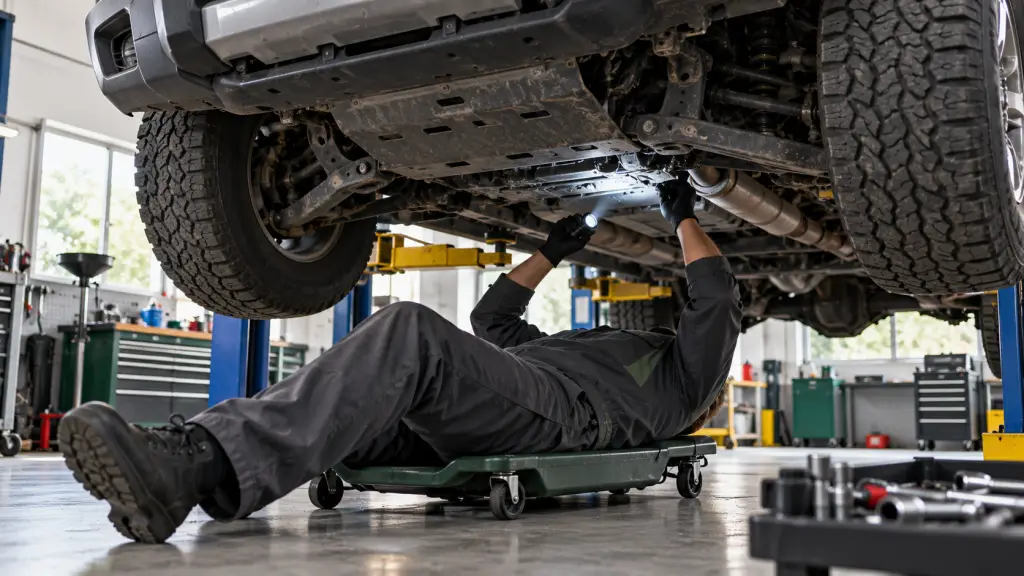
The frame and underbody deserve special attention when purchasing an older pickup.
Vehicles driven in regions that use road salt may develop corrosion. Trucks frequently used on muddy trails, near coastal environments, or in areas with persistent moisture may also need careful underbody inspection.
Ask a qualified inspector to examine:
- Frame rails and crossmembers.
- Suspension mounting points.
- Areas around body and frame connections.
- Brake and fuel lines where accessible.
- Signs of heavy corrosion, repairs, or previous welding.
- Underbody damage from rocks or off-road impacts.
Surface rust and structural corrosion are not the same thing. The seriousness of corrosion depends on its location, depth, and effect on structural integrity.
Fresh undercoating can make the condition of the metal harder to assess. Ask whether the coating is documented and whether the inspector can examine the relevant areas safely.
If significant structural corrosion or questionable frame repairs are found, obtain a professional assessment before proceeding. Severe corrosion may make a truck unsafe or uneconomical to repair.
4. Check the Engine Before and During the Test Drive
The engine should be assessed when cold as well as after it reaches normal operating temperature, where this can be done safely.
Before starting the truck, inspect for visible fluid leaks and check whether the engine bay appears consistent with the seller’s maintenance history.
During the start-up and test drive, pay attention to:
- Unusual knocking, ticking, or grinding.
- Excessive exhaust smoke.
- Rough or inconsistent idle.
- Misfires or hesitation.
- Overheating.
- Warning lights.
- Unexplained loss of engine oil or coolant.
Some engine sounds may be normal for a particular engine design, so do not diagnose a problem from sound alone. A mechanic can compare the observed behaviour with the specifications for that exact engine.
Ask whether the truck has been consuming oil or coolant between services. Request supporting repair records for any previously reported issue.
Do not open a hot radiator cap or handle hot cooling-system components during an inspection.
5. Evaluate the Transmission and Drivetrain
Transmission behaviour can have a significant effect on ownership costs. The correct checks depend on whether the Tacoma has an automatic or manual transmission and which drivetrain is fitted.
During the test drive, look for:
- Delayed or harsh gear engagement.
- Unexpected slipping.
- Unusual whining or grinding.
- Vibration under acceleration.
- Fluid leaks.
- Difficulty selecting gears on a manual model.
- Warning messages or abnormal drivetrain behaviour.
These symptoms do not necessarily indicate a failed transmission. Engine performance, mounts, sensors, and other components can sometimes produce similar behaviour.
For four-wheel-drive models, verify that the system operates according to the owner’s manual and that the seller can explain its operation. Do not engage four-wheel-drive modes on unsuitable surfaces or operate the system contrary to the vehicle’s instructions.
Ask a qualified mechanic to inspect the transfer case, differentials, driveshafts, and associated components where fitted.
If the truck has been used for towing or demanding off-road driving, request details about that use and any related maintenance.
6. Inspect the Suspension, Steering, and Tyres
A Tacoma used for work or off-road driving may have experienced more demanding conditions than a lightly used road vehicle.
Check the tyres for uneven wear, damage, cracking, and differences between the tyres fitted to the truck. Confirm that tyre size and load ratings are suitable for the vehicle.
Inspect the following systems:
- Shock absorbers and struts, where fitted.
- Springs and suspension components.
- Steering joints and linkages.
- Wheel bearings.
- Ball joints and bushings.
- Wheels for cracks or impact damage.
- Evidence of suspension modifications.
During the test drive, notice whether the truck pulls to one side, vibrates, knocks over bumps, or feels unstable. These symptoms can have several causes and should be investigated rather than attributed automatically to tyre alignment.
If the Tacoma has a suspension lift, oversized tyres, or aftermarket wheels, ask who installed the equipment and whether the changes were completed correctly. Check local roadworthiness requirements and the effect of modifications on insurance and warranty coverage.
7. Look for Signs of Heavy Towing or Off-Road Use
Off-road use is not automatically a reason to reject a Tacoma. A truck can be modified and maintained responsibly. However, demanding use makes a thorough inspection particularly important.
Look for evidence such as:
- Scrapes or dents beneath the chassis.
- Damaged skid plates.
- Bent or heavily scratched recovery points.
- Worn suspension components.
- Mismatched tyres.
- Aftermarket wiring installed without clear documentation.
- Signs of water entry in the cabin or engine bay.
- Towing equipment with unexplained wear or damage.
Ask the seller how the truck was used, whether it regularly towed trailers, and whether it experienced deep-water crossings or serious impacts.
Check that any accessories are installed correctly and that towing equipment is appropriate for the vehicle’s specifications.
Do not assume that a truck advertised as an off-road model is ready for every trail or towing task. Confirm the limits and equipment for the exact configuration.
8. Test the Brakes and Check the Safety Equipment
Brakes, tyres, steering, and safety systems should be treated as essential buying considerations rather than optional upgrades.
Check for:
- Grinding or persistent brake noise.
- Brake-pedal vibration.
- A soft or unusually firm pedal.
- The truck pulling during braking.
- Visible brake-fluid leakage.
- Warning lights that remain on.
- Damaged seat belts or obvious airbag-system warnings.
A test drive is not a substitute for a workshop inspection. Brake pads, discs, lines, and other components may require closer examination on a lift.
Also verify that the truck’s safety features match the advertised configuration. Features may differ by trim, production date, and optional equipment.
If an airbag or other critical safety warning is displayed, ask for professional diagnosis before purchasing.
9. Check the Cabin, Electronics, and Accessories
Interior condition can provide clues about how a truck has been used, but it should not be treated as conclusive proof of mileage or care.
Inspect the seats, carpets, steering wheel, pedals, switches, and cargo areas for wear or damage that seems inconsistent with the odometer reading.
Test the equipment fitted to that particular truck, including:
- Headlights and exterior lights.
- Wipers and washers.
- Air conditioning and heating.
- Windows and door locks.
- Infotainment and audio systems.
- Cameras and parking sensors, where fitted.
- Four-wheel-drive indicators, where applicable.
- Instrument-cluster displays.
Look for damp carpets, water stains, musty smells, or signs of previous flooding. Water damage can affect wiring and electronic modules even after the interior has been cleaned.
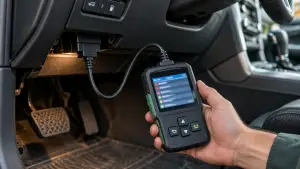
If electrical warnings appear or several systems behave unexpectedly, have the vehicle scanned and inspected before agreeing to buy it.
10. Understand Ownership Costs Before Negotiating
The purchase price is only one part of the cost of owning a used Tacoma.
Before making an offer, consider the likely cost of maintenance, insurance, registration, fuel, tyres, and any repairs identified during the inspection.
Ask a local mechanic for estimates on necessary work. Parts availability and labour rates can vary significantly between locations, particularly for imported vehicles.
Potential expenses may include:
- Routine servicing.
- Tyres and wheel alignment.
- Brake repairs.
- Suspension work.
- Fluid servicing.
- Battery replacement.
- Repairs to aftermarket equipment.
- Correcting deferred maintenance.
Use inspection findings to negotiate fairly. A documented repair requirement is a stronger basis for negotiation than an unverified claim that a particular model is unreliable.
Keep an emergency repair budget after purchasing an older vehicle, even if the initial inspection is reassuring.
11. Why a Pre-Purchase Inspection Matters
A pre-purchase inspection by an independent mechanic can identify problems that are difficult to detect during a short test drive.
Choose a mechanic familiar with the Tacoma’s model year and drivetrain. Ask whether the inspection includes an underbody assessment, a scan for diagnostic trouble codes, a road test, and a review of service records.
A useful inspection report should explain:
- Safety-critical defects.
- Current leaks and mechanical concerns.
- Signs of structural damage or corrosion.
- Repairs that should be completed soon.
- Maintenance that is overdue.
- Items that need further diagnosis.
If the seller refuses a reasonable independent inspection, consider walking away. There are other used trucks available, and buying without adequate checks creates unnecessary risk.
12. How a Workshop Manual Helps Tacoma Owners
A workshop manual can help owners and qualified technicians understand model-specific maintenance and repair procedures after a purchase.
Depending on the exact vehicle and available documentation, it may include:
- Engine and transmission service procedures.
- Wiring diagrams.
- Diagnostic information.
- Suspension and brake repair instructions.
- Fluid specifications.
- Torque specifications.
- Component inspection procedures.
- Safety precautions.
The correct documentation matters because procedures and specifications can differ between model years, engines, transmissions, and drivetrain configurations.
Confirm the truck’s model code and production details before selecting a manual. A guide for a different Tacoma generation may not contain the correct procedure.
You can explore WorkshopManuals.com and WorkshopManuals.org when researching vehicle-specific repair documentation. Verify the exact model coverage and the legitimacy of the material before relying on it.
For safety-critical repairs or work requiring specialised tools, use a qualified technician.
Used Toyota Tacoma Buying Checklist
Before making a final decision, use this quick checklist:
- Confirm the VIN, model year, trim, engine, transmission, and drivetrain.
- Review service history and available vehicle history records.
- Check applicable recalls.
- Arrange an independent inspection of the frame and underbody.
- Inspect for engine, transmission, cooling-system, and drivetrain problems.
- Check tyres, brakes, steering, and suspension.
- Test the electrical equipment and investigate warning lights.
- Review modifications and towing equipment.
- Take a suitable test drive.
- Obtain repair estimates and negotiate based on documented findings.
If major issues remain unresolved, compare the likely repair cost with the price of another vehicle before committing.
Frequently Asked Questions
Is a used Toyota Tacoma a good purchase?
It can be a suitable purchase when the truck’s condition, maintenance history, configuration, and price match your needs. The individual vehicle’s condition matters more than general reputation.
What is the most important thing to check on an older Tacoma?
There is no single check that replaces a full inspection. Frame corrosion, maintenance records, engine and drivetrain condition, brakes, tyres, and safety-related faults all deserve attention.
Should I buy a Tacoma with high mileage?
High mileage alone does not determine whether a truck is a good purchase. Review the service history, inspect its condition, and obtain an independent assessment of likely repairs.
Do all 2005–2023 Tacomas have the same problems?
No. Engines, equipment, production details, and recalls vary across model years and configurations. Research the exact year and vehicle rather than assuming every Tacoma has identical issues.
Where can I check recalls for a used Tacoma?
US buyers can search the NHTSA recall database or Toyota’s official recall lookup. Buyers elsewhere should also consult the relevant local Toyota distributor.
Final Thoughts
A used Toyota Tacoma should be evaluated on its actual condition, documented maintenance, configuration, and suitability for your needs. A careful review of the service history, frame, drivetrain, suspension, brakes, and electrical systems can help reveal problems before money changes hands.
Do not skip an independent pre-purchase inspection, especially when the truck has been used for towing, modified for off-road driving, or operated in areas where corrosion is common.
Once you purchase the vehicle, keep accurate maintenance records and use documentation that matches its exact specifications. This gives you a more reliable foundation for planning repairs and managing long-term ownership costs.
ToyotaOutreach.com is an independent website and is not affiliated with or endorsed by Toyota Motor Corporation.